
Asking the Clergy: Where gospel music gets its power
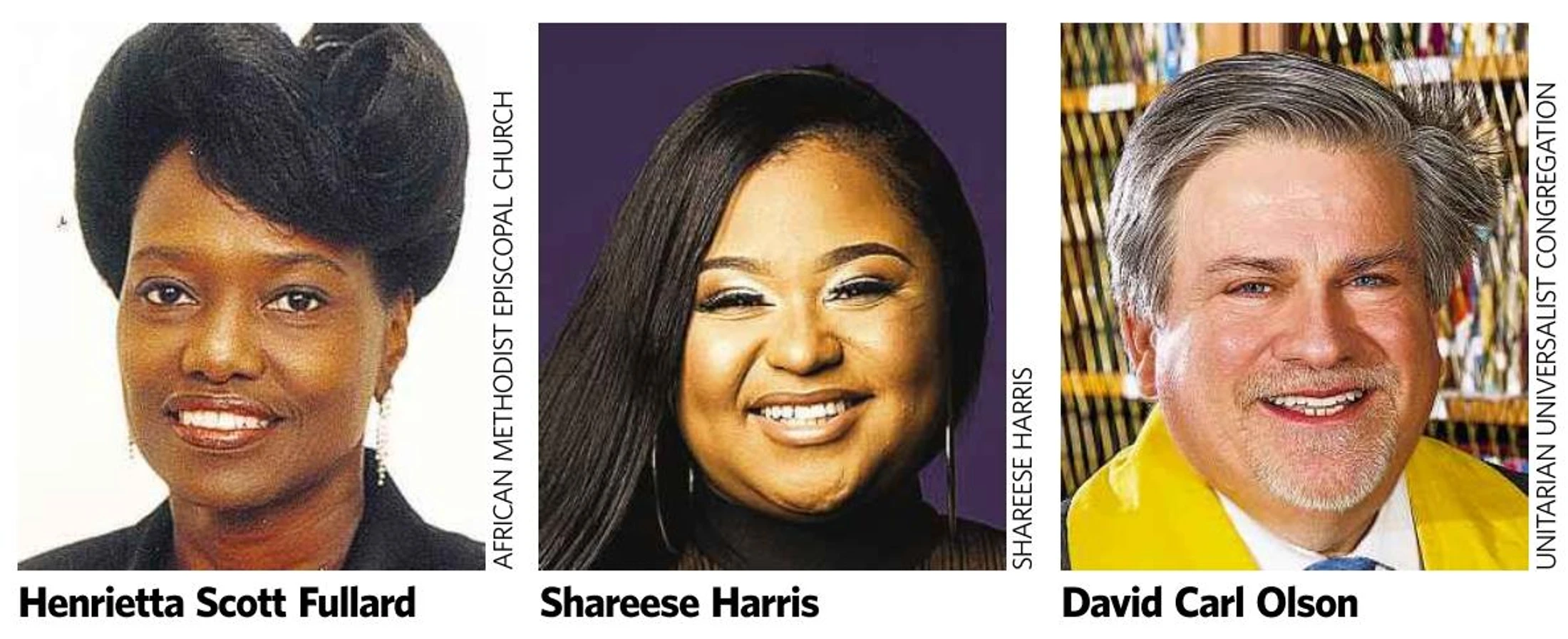
From left, The Rev. Henrietta Scott Fullard, Shareese Harris, and The Rev. David Carl Olson Credit: African Methodist Episcopal Church; Shareese Harris; Unitarian Universalist Congregation at Shelter Rock
Published by Newsday, February 4, 2024. Jim Merritt, Journalist
Gospel music performance is not just a Grammy category, it’s also a spiritually inspiring part of many Long Island worship services. This week’s clergy discuss the value of a vocal tradition that draws on biblical themes and, according to the Library of Congress, is rooted in the call and response singing of the African American South.
The Rev. David Carl Olson Associate Minister for Congregational Life, Unitarian Universalist Congregation at Shelter Rock
The choir of the Shelter Rock Unitarian Universalist congregation recently had a concert on the history of Gospel music. It spanned from traditional spirituals through early Gospel and into more contemporary sounds. Under the direction of Nigel W. Gretton, and with the participation of local Gospel artists, we experienced more than a concert. It became a service of worship. Our religious tradition embraces pluralism. One power of Gospel music can be found in its capacity to bridge difference and provide emotional connections in the human experience of overcoming challenges. In congregation-based community organizing in Unitarian Universalist congregations across the country, the sharing of Gospel music by interreligious audiences expects that we will find commonalities in the human desires for freedom and for victory, even in the face of insurmountable odds. Not all Unitarian Universalists find the Christian message of the Gospel compelling, but we heed the advice of 16th century founder Frances David: “We need not think alike to love alike.” With humility, many of us find inspiration in the Gospel songs that tell of our connections to a world that is yet to be, to a power greater than ourselves.